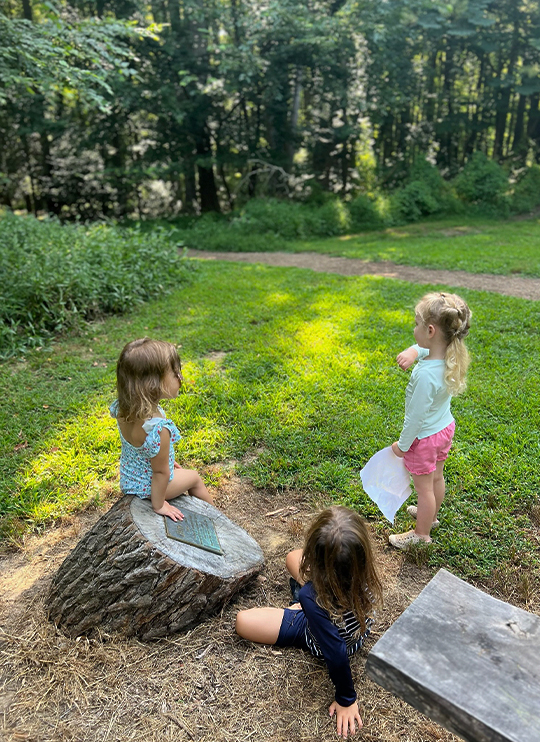
The building blocks of our play-based classes.

Outdoor play builds more than memories. It builds the skills children need to grow.

Childhood has increasingly moved indoors, with children spending less time in unstructured outdoor play and more time on screens and in structured activities.

Take part, let's get kids back outside.

See Upcoming Classes

As children spend more time indoors and on screens, they’re missing out on the crucial learning, problem-solving, and independence that outdoor play provides for developing minds.

Nine reasons outdoor play matters.

Outdoor play builds focus, problem-solving, communication, confidence, and resilience, all key to child development.

Become an outsider.
Join a class.

Movement, nature, and self-directed play give children an opportunity to reset their minds while practicing sustained attention, persistence, and focus. Outdoor environments invite children to slow down, notice their surroundings, and choose what they want to explore and investigate. Rather than being directed from one activity to the next, children can follow their curiosity and become deeply engaged in what interests them. This self-directed attention helps strengthen their ability to concentrate, stay with a task, and return to learning with greater focus.

Become an outsider.
Join a class.

Outdoor play gives children space to move, explore, and decompress while stepping away from the demands of structured environments and screens. With opportunities for movement, choice, and self-directed play, children can practice emotional regulation, build confidence, and develop resilience. It also creates natural opportunities for children to interact, collaborate, negotiate, and work through conflicts in a less structured environment. As children navigate these experiences independently and with others, they learn to manage emotions, communicate their needs, consider different perspectives, and develop the social skills needed to build positive relationships.

Become an outsider.
Join a class.

Open-ended materials and environments have no single “right” way to use them, encouraging children to imagine possibilities, think creatively, and find their own solutions. Through building, experimenting, and creating, children learn to test ideas, make adjustments when things don’t work, and approach challenges from different perspectives. Outdoor play provides real-world problems to solve, giving children the freedom to take risks, make decisions, learn from mistakes, and develop solutions independently. Over time, these experiences build critical thinking, persistence, and confidence in their ability to figure things out.

Become an outsider.
Join a class.

There are natural opportunities for children to talk, ask questions, describe their ideas, and collaborate with others when playing outside. Hands-on experiences make new vocabulary meaningful and give children a reason to use language in real-world situations. As children explore, build, create, and interact with their surroundings, they practice communicating their thoughts, listening to others, and learning new words in context. These experiences help strengthen vocabulary, expressive language, and communication skills in a way that feels natural and engaging.

Become an outsider.
Join a class.

Open-ended outdoor play sparks imagination and gives children the freedom to create characters, adventures, and stories of their own. As they play, children practice sequencing events, describing experiences, and communicating their ideas with others.

Become an outsider.
Join a class.

Being outside naturally sparks children’s curiosity by giving them opportunities to explore, investigate, and discover things for themselves. As children interact with nature, open-ended materials, and new environments, they begin to ask questions, make predictions, and test their ideas. Instead of simply being given an answer, they learn through observation, experimentation, and trial and error. This encourages children to think more deeply, follow their interests, and develop a genuine desire to understand how and why things work.

Become an outsider.
Join a class.

Outdoor play gives children meaningful opportunities to interact, collaborate, and navigate challenges with others. Through unstructured play, children practice communication, cooperation, sharing, negotiation, and conflict resolution while learning to understand different perspectives. They also have opportunities to make choices, take appropriate risks, manage frustration, and work through challenges independently. These experiences help children build confidence, resilience, self-awareness, and emotional regulation—skills that support them both in and out of the classroom.

Become an outsider.
Join a class.

As children explore nature, materials, and their surroundings, children practice noticing details, comparing differences, identifying patterns, and describing what they see. These hands-on experiences help expand their vocabulary and strengthen their ability to observe, communicate, and make connections between what they experience and what they already know.

Become an outsider.
Join a class.

Taking on challenges, making decisions, and figuring things out independently helps children discover what they are capable of. Whether climbing, building, balancing, or solving a problem, children learn that mistakes are part of the process and that they can try again when something doesn’t work. These experiences build confidence while teaching persistence, adaptability, and resilience. Over time, children become more willing to take on challenges, work through frustration, and trust in their ability to find solutions.

A childhood of learning, growing, and thriving starts outside.

Boosting young minds through outdoor play.

Outdoor play gives children the space to move, explore, and reset while building focus, curiosity, creativity, and a deeper understanding of the world around them. Through open-ended materials, hands-on challenges, and self-directed play, children practice problem-solving, communication, observation, persistence, and the ability to learn from mistakes. Playing alongside others also gives children meaningful opportunities to collaborate, negotiate, manage emotions, resolve conflicts, and build the confidence and resilience they need to navigate the world independently.

See Core Programming
i
See what
play
can do.

Convinced that outdoor play matters? See what it can do for your child through intentional, expert-led programming.